Managing office cleaning shouldn’t feel like a constant guessing game, but for many teams, it does. One day everything looks fine. The next day, something gets missed, and nobody can clearly explain what happened or why. That frustration is common, especially in busy offices where consistency matters.
There’s a simpler way to handle it. Strong accountability and clear documentation take the uncertainty out of cleaning. They make it easier to trust the work being done, easier to address issues early, and easier to manage cleaning without stress.
This article walks through how accountability and documentation are changing commercial cleaning, the tools that make proof of cleaning simple instead of complicated, and practical ways facility managers and cleaning providers can put these systems in place without disrupting daily operations.
Current State of Office Cleaning: Industry and Emerging Trends
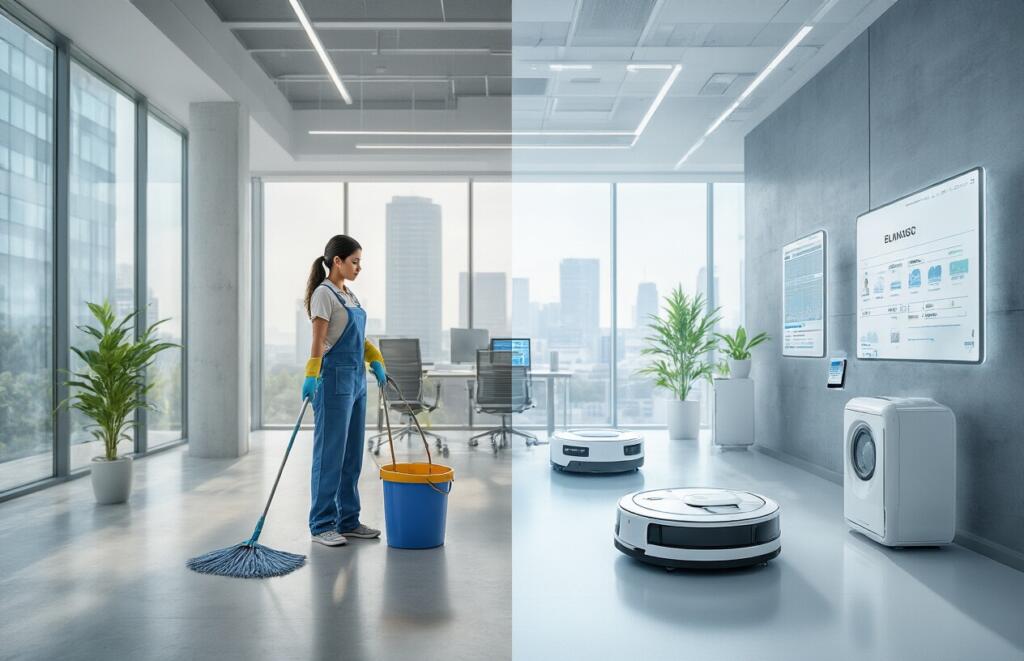
The office cleaning industry is evolving, and many facility managers are seeing the change firsthand. Technology now shapes how buildings are managed, tracked, and maintained. The same visibility expected from property management systems is now expected from commercial cleaning services.
Smart sensors: These sensors trigger alerts when attention is needed, allowing cleaning teams to respond based on actual demand rather than fixed schedules. This approach helps prioritize high-traffic areas, prevent supply shortages, and address issues early—before they turn into complaints.
Mobile reporting tools: Cleaning teams access assigned tasks through a mobile app and confirm completion as work is done. Each action is automatically time-stamped, with photos added when needed, giving managers real-time visibility into progress.
QR check-ins: Scannable codes placed in individual spaces log when a cleaner enters and completes work in that area. This creates a reliable, location-based record that confirms each room was serviced.
Usage tracking systems: Supply and equipment usage is recorded as cleaning takes place, tracking how often products are used and where resources are consumed. This data helps identify waste, prevent shortages, and align cleaning frequency with actual demand.
These systems make it possible to see what was cleaned, when it happened, and how resources were used.
Clients today want measurable results from their cleaning services. Visual inspections alone no longer provide enough confidence. Facility managers and building owners expect documented proof of task completion, health and safety compliance, staff training, and sustainability practices. Cleaning now plays a direct role in tenant satisfaction, workplace safety, and operational risk management.
This shift is also being reinforced by industry standards and regulatory guidance. Frameworks such as OSHA’s Hazard Communication Standard and CDC cleaning guidance for shared spaces emphasize documented procedures, staff training records, and consistent verification of cleaning activities. Within the commercial cleaning industry, ISSA’s Cleaning Industry Management Standard has further formalized accountability and documentation as benchmarks for professional service delivery. Together, these standards reflect a broader expectation: office cleaning must be structured, verifiable, and auditable.
At Clean Connects, we see these expectations as the new baseline for professional office cleaning. Regulatory standards, green building certifications, and insurance requirements continue to push the industry toward stronger accountability and clearer documentation. These shifts are turning commercial cleaning into a structured, data-driven service where transparency and proof matter as much as results.
The Rise of Accountability Systems in Office Cleaning
Smart tools now play a central role in professional cleaning operations. IoT sensors, QR code check-ins, and mobile reporting tools track where teams work, how long tasks take, and when areas are serviced. These systems feed into centralized dashboards that give facility managers real-time insight into cleaning progress. At Clean Connects, this visibility protects both our clients and our teams by replacing assumptions with facts.
Performance measurement has also evolved. Cleaning quality now connects directly to business outcomes such as tenant satisfaction, compliance, sustainability goals, and cost control. Health and safety tracking confirms that high-touch areas receive proper attention, while resource monitoring ensures responsible chemical and energy use.
Efficiency gains deliver measurable savings. Accurate labor data improves scheduling and training. Supply tracking reduces waste and prevents shortages. Predictive insights help resolve issues before they affect tenants or operations. Clean Connects uses these systems to turn cleaning into a reliable, data-driven service that delivers consistency, accountability, and long-term value.
Benefits for Facility Managers and Building Owners

Impact on Office Cleaning Service Providers and Workers
Accountability and documentation are changing how cleaning service providers operate and how cleaning professionals experience their work. Office cleaning in 2026 demands higher skill levels, stronger systems, and clearer communication. Providers now invest heavily in training, digital tools, and structured processes to meet rising client expectations.
How cleaning roles are evolving:
- Increased use of digital checklists, mobile apps, and photo verification
- Greater focus on quality control and documented standards
- Stronger communication between cleaning teams and facility managers
- Clear expectations supported by measurable performance data
These changes have raised professionalism across the workforce and created more structured career paths.
Compensation models have shifted as well. Performance-based contracts reward teams for consistency, efficiency, and client satisfaction rather than hours alone.
What this means for workers:
- Higher earning potential through bonuses and skill tiers
- Transparent performance metrics that guide improvement
- Reduced turnover due to clearer advancement opportunities
Documentation has also improved relationships with clients. Disputes decline when both sides rely on verified records instead of assumptions. Cleaning teams feel more respected, providers operate more efficiently, and partnerships replace transactional service models.
Implementation Strategies for Successful Adoption
Successful accountability systems start with choosing the right tools. Cleaning providers and facility managers need technology that matches the size, complexity, and frequency of their operations. Smaller offices often need simple mobile tracking, while larger facilities benefit from integrated platforms that offer real-time visibility. Cloud-based systems provide flexibility, scalability, and easier access for both teams and managers.
Training plays a critical role in adoption. Cleaning teams need clear communication about how documentation supports fairness and improvement, not punishment. Hands-on training, practical demonstrations, and paid training time help teams build confidence quickly.
Best practices for staff training:
- Focus on real-world usage, not theory
- Use visual and multilingual materials
- Provide clear technical support channels
- Encourage peer mentoring during rollout
Performance benchmarks must reflect reality. Providers should establish baselines before implementation and set tiered expectations that account for experience levels. Quality, speed, and consistency should be measured together rather than in isolation.
Documentation workflows should feel natural, not burdensome. The strongest systems allow teams to document work as it happens, support consistency across facilities, and protect records through backups and audits. When designed correctly, documentation strengthens operations without slowing them down.
Office cleaning in 2026 is no longer defined by effort alone. Businesses now expect clarity, consistency, and proof. Accountability and documentation have become essential because they remove uncertainty from an operation that directly affects health, safety, and daily productivity.
As offices grow more complex and expectations rise, cleaning can no longer operate on trust and routine alone. Verified processes, clear records, and real-time visibility give facility managers control, reduce risk, and support smarter decisions. These systems also elevate cleaning teams, creating fairness, professionalism, and measurable performance across every site.
This shift is not a trend—it reflects how modern workplaces operate. Cleaning providers that embrace accountability position themselves as partners, not vendors. Organizations that demand documentation protect their people, their assets, and their reputation.
By 2026, accountability will define what professional office cleaning looks like. Businesses that adopt it now will operate with greater confidence, fewer disruptions, and a standard of cleanliness that can be proven, not assumed.